

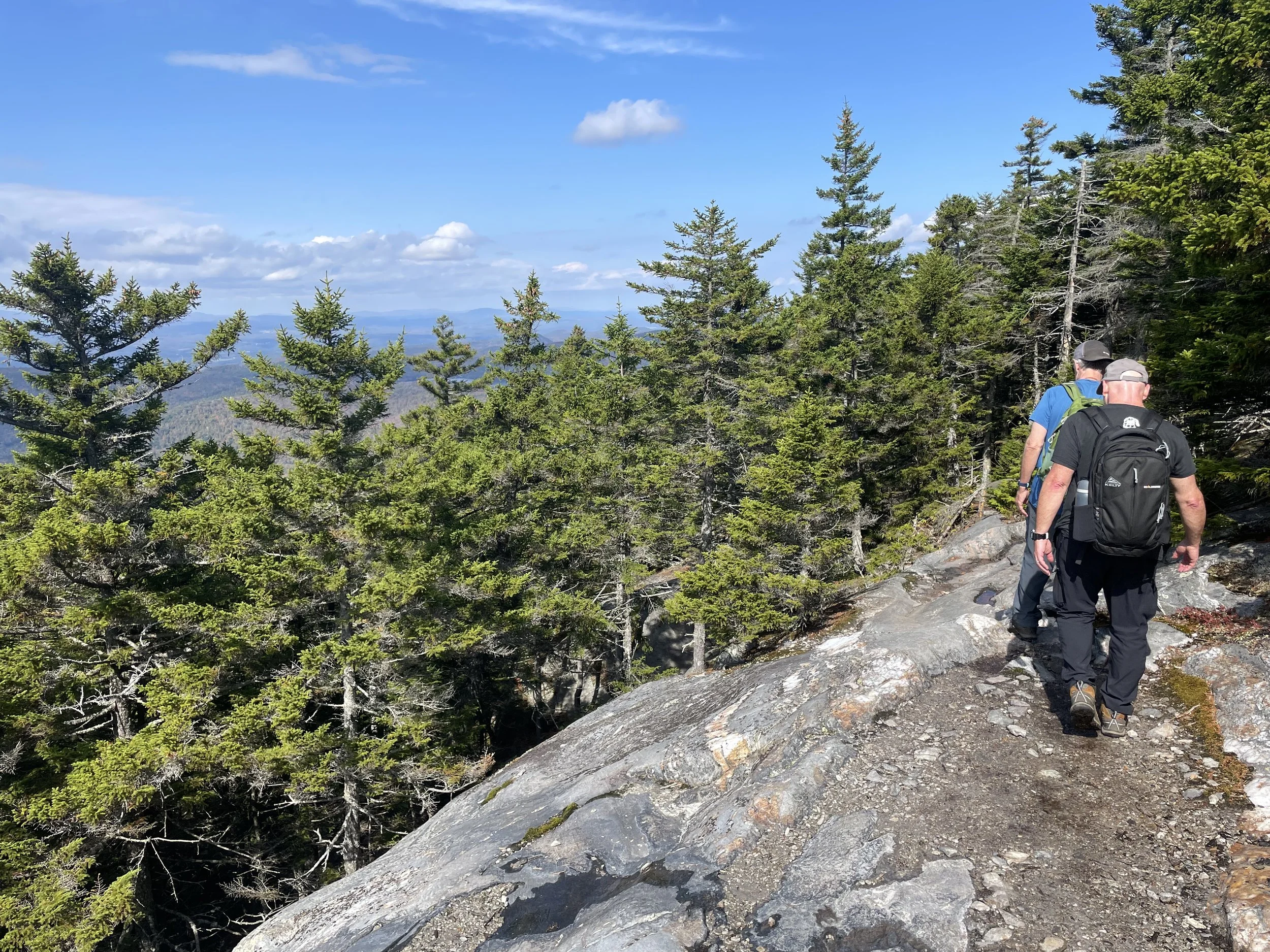
Heading into unchartered terrain with the right partners can make all the difference.
A few years ago, I discovered something that changed the way I think about leadership.
Leaders need other leaders.
Not just mentors.
Not just coaches.
Not just experts.
Leaders Need Peers.
People who are close enough to the work to understand it, far enough outside your organization to see it differently, and willing to be honest with you when you need another perspective.
I was reminded of this recently when I listened to Molly Graham's interview with Bill Gurley on her WorkLife podcast.
Gurley makes a simple argument: we tend to put a lot of emphasis on mentors and people further ahead of us, while overlooking the power of people who are walking alongside us.
He recommends finding a few people who are on the same “rung of the ladder”—people who are trying to figure out many of the same things you are.
Ideally, he says, they should be outside your organization.
That matters.
People inside your organization are navigating many of the same office politics, may have adopted the same sacred cows, and have their own reasons to manage impressions. Sometimes what you need most is someone who can look at the same problem from a completely different vantage point, without those same constraints.
Someone who can say:
“We dealt with something similar. Here's what we learned.”
Or:
“Have you considered looking at it this way?”
Or sometimes simply:
“Yeah. That is really hard. I know.”
That last one may be more powerful than we realize.
There is something different about being understood by a peer.
A mentor may have already solved the problem you're facing.
A coach may have a framework for helping you think about it.
An expert may know more than you do.
But someone who is facing a similar challenge can offer something different: the experience of being understood.
They don't just understand the problem.
They understand what it feels like to be inside the problem.
I experienced this during COVID with the peer group I had been part of as a leader in wilderness therapy.
We were all trying to answer questions that had no obvious answers. Would our programs survive? How would we protect our staff and students? What would happen if large numbers of people became sick? How would we keep operating?
We didn't need someone to tell us that it was stressful.
We were all living it.
That shared experience created a kind of empathy that would have been difficult to manufacture.
And it made us better problem-solvers.
One program would discover something that worked, and the others could learn from it. Someone would raise a question that hadn't occurred to the rest of us. Someone would admit they were struggling with something that others were quietly struggling with, too.
We weren't competing for the answer.
We were trying to help each other find one.
That's the kind of community we are trying to create in the Leadership Growth Guild.
Trust comes first.
Without trust, people prioritize managing or polishing their image.
With trust, they can share what's actually happening.
They can admit uncertainty.
They can ask a question they're embarrassed to ask.
They can say, “I don't know.”
They can talk about the decision they're wrestling with, the conflict they're avoiding, the mistake they're trying to understand, or the part of leadership they're simply tired of carrying.
That kind of openness creates the possibility for something deeper than professional development.
It creates connection.
And connection changes the nature of the relationship.
Growth becomes mutual.
The Guild isn't built around the idea that one person has the answers and everyone else is there to learn.
We believe there is wisdom in the room.
Every leader brings experience that someone else can learn from. Every leader has blind spots that someone else may be able to see. Every leader has lived through something that could help another person navigate what comes next.
So we learn from one another.
We challenge one another.
We encourage one another.
And we want one another to succeed.
That last part is important.
A healthy peer community isn't a collection of people quietly competing with one another.
It's a group of people who genuinely root for each other.
When one person grows, everyone benefits.
When one organization discovers something that works, the knowledge can travel.
When someone is struggling, the group gets stronger by helping them through it.
This is the opposite of scarcity thinking.
There is room for all of us to succeed.
The relationship doesn't end when the monthly gathering does.
The monthly session is simply the structure that brings us together.
The real value develops over time.
You get to know the people in the room.
You learn their stories.
You know what matters to them.
You understand their strengths and their struggles.
You develop a history together.
And eventually, you have people you can call outside of the scheduled meeting. For work or personal reasons.
People who already understand the context.
People who don't need the five-minute explanation before you can get to the real question.
People who have your best interests at heart.
That's different from networking.
It's different from collecting contacts.
It's different from having another professional resource in your phone.
It's community.
This matters more than ever in behavioral healthcare.
We aren't simply leaders.
We are leading organizations that do extraordinarily human work.
We navigate complex client dynamics, financial constraints, workforce challenges, regulations, families in crisis, public scrutiny, changing markets, and the enormous responsibility of caring for people when they are at their lowest and most vulnerable. Sometimes, the stakes are life and death.
That creates a particular kind of strain.
And while our organizations may compete with one another, the work itself connects us.
We all want the field to become healthier.
We want better outcomes.
We want stronger organizations.
We want people doing this work to be able to sustain it.
And we want the leaders doing the work to have a chance to thrive themselves.
That is why the Leadership Growth Guild is intentionally built around peers in the same industry, rather than around a single expert or curriculum.
We bring seasoned facilitators into the room—people who have owned, led, and operated programs themselves. But we don't pretend that the facilitators are the source of all the answers.
Our job is to create the conditions for the people in the room to learn from one another.
To ask better questions.
To challenge assumptions.
To share what is working.
To be honest about what isn't.
To become better leaders—and, ultimately, better people.
The idea of co-climbing captures this well.
Because leadership can sometimes feel like climbing alone.
You can have people supporting you from below. You can have mentors who have already reached the summit. You can have experts pointing out the route.
But there is something different about having people beside you.
People who understand the terrain.
People who can look over and say, “You've got this.”
People who will tell you when you're heading toward a cliff.
People who will celebrate when you gain the next ridge.
And people who will keep climbing when you need a little time to catch your breath.
You don't have to climb alone.
That may be the most important thing a peer community can offer.
To learn more about the Leadership Growth Guild and our faculty, visit www.guildleadership.com.
