

The Question We Shouldn’t Have Shut Down
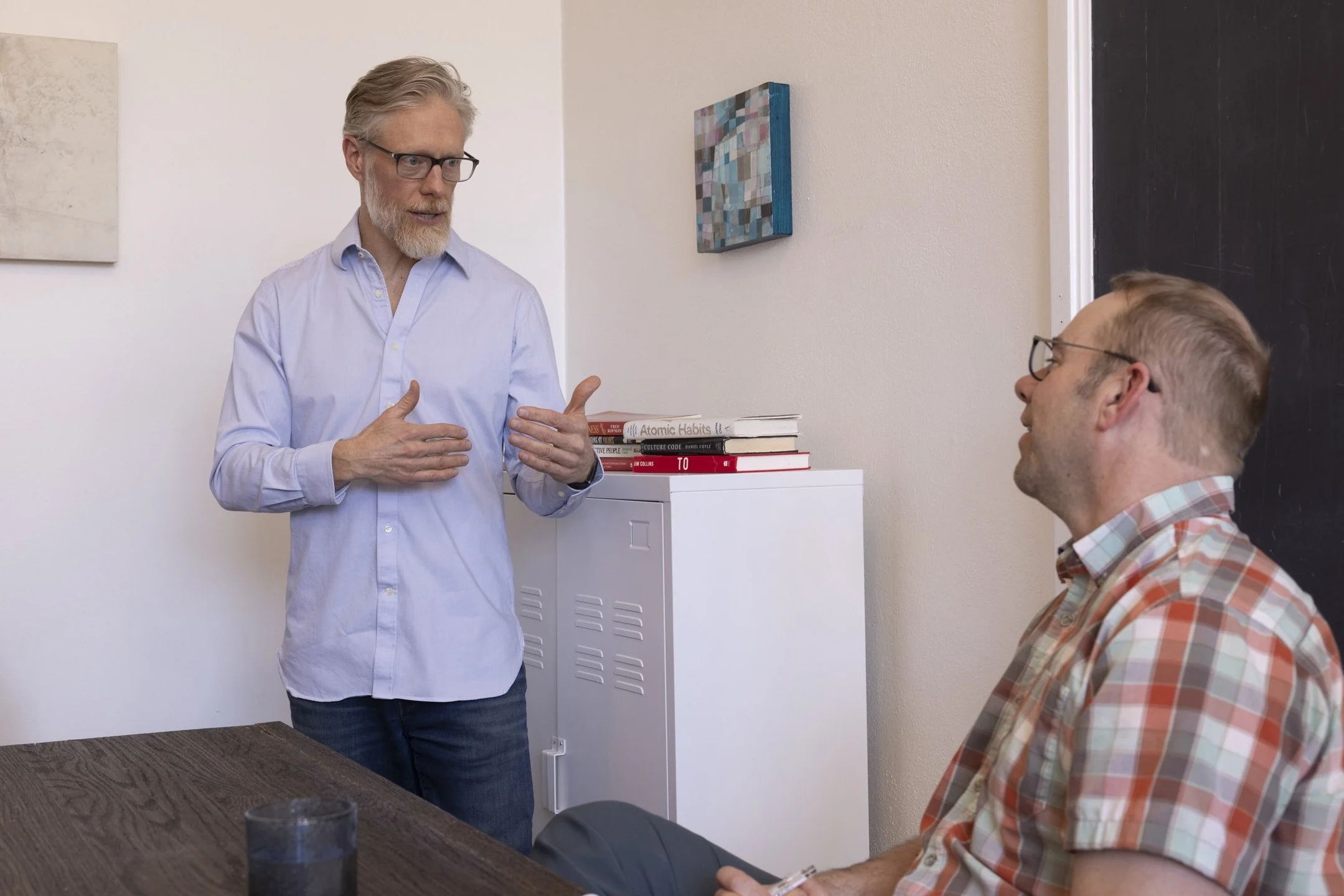
Leaders listening with humility and curiosity supports a culture of psychological safety
A few years after our frostbite incident, the reverberations of that tragedy were still being felt throughout our organization. But we were beginning to claw our way forward—healthier, stronger, and with a renewed commitment to how we thought about safety and risk.
We had launched a risk management committee and spent several months developing a different approach to how we identified and responded to risk. We were moving away from the familiar blame-and-shame model:
Whose fault was this? Who was responsible? Who failed?
Instead, we were trying to build something different.
We wanted everyone in the organization to understand that they had a role in identifying risk and improving the way we operated. From the people in the office to those in the field. Whether they answered the phone or ordered food or sorted mail or lead therapy groups, or screened students or led hikes with students, everyone contributed to both our successes and our failures.
Everyone had a role in making the organization better—and safer.
So we devoted an entire All Hands meeting to the topic. I had spent several days preparing the presentation. I wanted people to understand both the importance of our mission and the real consequences—good, bad, and ugly—that came with the work we did.
More importantly, I wanted people to understand that risk wasn't something that belonged to the risk management committee, or the operations team, or the field staff. It wasn’t just those with the obvious safety roles.
It belonged to all of us.
The presentation seemed to land well. Afterwards, we opened the floor for questions and comments. Much of the feedback reinforced the narrative we were hoping to create.
Then someone asked a question that challenged it.
I don't remember whether it was technically a question or more of a statement. But the idea was essentially this: field guide turnover must be contributing to errors and accidents and it’s not being successfully addressed.
It was a familiar critique—older than our program itself—and it was quickly dismissed by another member of the leadership team.
It was too provocative. It opened a can of worms we weren't prepared to open.
At the time, I remember feeling relieved.
We had avoided going down that road. We had defended the organization. We had put the criticism to rest.
Or so I thought.
Years later, I saw it differently.
I was preparing a presentation for a therapeutic program called When Things Go Wrong: How Leaders Can Avoid the Blame Trap and Protect Trust when that question came back to me.
And suddenly, I saw what I hadn't seen that day.
We had just told an entire organization that everyone had a role in identifying risk and making the organization better.
Someone had taken us at our word.
They had raised a concern about something they believed might be contributing to risk.
And we shut it down.
Maybe they were wrong. Maybe field guide turnover wasn't a significant contributor to errors or accidents.
But that wasn't really the point.
The point was that someone had noticed something and was willing to put it on the table.
We should have been curious.
We should have asked, “Tell us more. How do you think this might be contributing? What are you seeing that makes you think that?”
Instead, we communicated something very different:
Watch what you say.
And perhaps even more importantly:
Be careful about challenging the prevailing narrative.
The response closed the conversation. But it may have also closed the door on future conversations that we never got to hear.
That's when I began to understand something about psychological safety that I had missed.
Psychological safety isn't simply about being allowed to speak.
Amy Edmondson, author of The Fearless Organization, describes psychological safety as an environment where people can take interpersonal risks—to speak candidly, ask questions, challenge assumptions, raise concerns, and acknowledge mistakes without fear of embarrassment or retribution.
Our colleague was technically allowed to speak.
But psychological safety isn't simply whether people are permitted to talk.
It's what happens after they do.
And this matters far beyond physical safety.
Every organization is constantly making decisions under conditions of uncertainty. We make decisions about people, clients, finances, strategy, operations, growth, hiring, technology, marketing, and risk.
We make assumptions about what will work.
We decide which problems deserve attention.
We decide which risks are worth taking.
And in all of those decisions, there is the possibility that someone in the room sees something we don't.
Every one of us weighs the decision to speak up when something concerning comes to mind at work.
Should I say something?
Maybe we notice something that doesn't feel right. Maybe we disagree with a decision. Maybe we see a potential problem. Maybe we have an idea that seems half-baked. Maybe we're simply confused.
And in that moment, there is a choice.
Speak up—or stay quiet.
The problem is that speaking up has an immediate interpersonal cost.
I might upset my boss.
I might embarrass someone.
I don't want to be seen as difficult.
Maybe I'm wrong.
I don't want to stir the pot.
Maybe it's not my place.
The consequences of staying silent, on the other hand, are usually much easier to predict.
Nothing happens.
The meeting moves on.
Nobody gets upset.
Nobody looks at you differently.
You remain safely inside the boundaries of the status quo.
That's why telling people, “You need to have the courage to speak up,” isn't enough.
If we rely entirely on individual courage, we are asking people to overcome a very predictable human tendency.
Leaders have to create environments where speaking up is safer than staying silent.
This isn't just about making people feel heard.
It's about making better decisions.
It's about seeing what we cannot see on our own.
It's about learning.
Edmondson's research describes numerous examples where people noticed something was wrong but didn't speak up—or spoke up and weren't heard.
In one example, a chemotherapy medication order was ordered at four times the standard dose. The patient began experiencing severe symptoms, yet nurses, pharmacists, and others failed to challenge the order.
In another, a co-pilot was concerned about poor visibility but didn't challenge the senior pilot. The result was a catastrophic collision that killed 538 people.
These aren't simply stories about people lacking courage.
They're stories about cultures in which hierarchy, deference, fear, or uncertainty made speaking up difficult.
And that's an important distinction.
Because if we simply ask, “Why didn't someone say something?” we place the responsibility entirely on the individual.
A better question is:
“What was it about the environment that made it difficult to say something?”
That is a leadership question.
And it matters in every organization.
A frontline employee may see a problem with a process that leadership has never encountered.
A finance person may recognize a risk hidden inside an otherwise attractive growth opportunity.
A salesperson may hear something from customers that challenges the company's assumptions.
A new employee may ask why the organization does something a certain way—and expose a process that everyone else has simply stopped questioning.
A manager may have concerns about a strategic decision but hesitate to challenge the CEO.
None of these situations necessarily involve physical safety.
But they all involve risk.
And they all have something else in common:
Someone may see something that the people making the decision don't see.
Silence prevents learning.
When people stop questioning, challenging, admitting mistakes, or offering uncomfortable observations, organizations become increasingly invested in looking like everything is okay rather than learning whether it actually is.
The culture becomes more concerned with protecting the status quo than protecting the mission.
Fear narrows the aperture.
It narrows thinking.
People begin asking, “What is the right answer?” rather than “What might we be missing?”
And that's dangerous in any organization.
Because the bigger the decision, the more perspectives we need—not fewer.
We don't need everyone to agree.
We need people to think critically. To challenge assumptions. To point out contradictions.
We need people to say, “I'm not sure this is going to work” or“I think we're missing something.”
And we need leaders who can hear those statements without immediately becoming defensive.
Looking back
I still think about that question.
Not because I know whether the person who asked it was right.
I think about it because I know what our response may have taught everyone else in the room.
My presentation was telling people that their voices mattered. That everyone had a role in identifying risk. That we needed them to identify problems and help us solve them.
And then someone did exactly that—and we shut them down.
We missed an opportunity to learn.
We missed an opportunity to explore a potentially legitimate organizational problem.
And we missed an even more important opportunity: to show everyone else what we really meant when we said, “Speak up.”
Psychological safety is responding in a way that opens the dialogue rather than closes it.
It is responding to the inconvenient question with curiosity.
It is being willing to say:
“I hadn't thought about it that way. Tell me more.”
It is creating a culture where even the least experienced person can challenge the most experienced person—not because they are necessarily right, but because we need to hear what they see.
Because the question we don't want to hear may reveal a risk we haven't considered.
It may expose a flaw in our strategy.
It may challenge an assumption we've taken for granted.
It may reveal a problem we've been avoiding.
And sometimes, it might even save a life.
The inconvenient question isn't necessarily a threat to the organization.
It may be the thing that makes the organization better.
