

What a Medication Error Unexpectedly Taught Me About Leadership

The best leadership lessons can come from unwanted circumstances.
It was somewhat early in my tenure as Program Director when we experienced a major medication error. A client had been given another student’s medication. While medication mistakes are not unheard of in residential or wilderness treatment settings, this one was particularly unsettling. It wasn’t simply a missed dose or the wrong timing. A student had been given another client’s heavy-hitting psychotropic medication — a serious mistake with potentially significant side effects and, understandably, something that would deeply concern a parent.
As part of my role, I was tasked with calling the family and their educational consultant to explain what had happened and apologize.
How Do I Do This Right?
Before the call, I sat at my desk trying to determine the right approach. I had some of the details, but not all of them — often the reality in wilderness treatment programs where communication can be delayed and piecemeal. I knew the staff involved had made an honest mistake. I also knew there were likely contributing factors I did not yet fully understand.
I wanted to communicate clearly and transparently. I wanted to take responsibility without assigning blame. And while I was not personally responsible for the error itself, I still felt the weight of representing our team and organization in that moment.
I remember wrestling with a deeper question beneath the surface. Here we were, a program serving families who had already been disappointed by schools, therapists, programs, and systems that had promised change and failed to deliver it. Many arrived understandably skeptical. Trust had already been worn thin.
And now this.
I found myself asking: How do I handle this in a way that helps rebuild trust rather than further damage it? How do I acknowledge the seriousness of the mistake while still conveying accountability, care, and integrity?
And Then It Hit Me: This Was All About Trust.
“Choosing to risk making something you value vulnerable to another person’s actions.”
That definition stopped me in my tracks because it perfectly described the position these families were in. Parents entrust programs like ours with what matters most to them — their children. Leadership, I realized, often involves stewarding that vulnerability with care.
At the time, trust still felt somewhat elusive to me. We all know what it feels like to trust someone. We also know what it feels like when trust is absent or broken. Yet few of us are ever taught how trust is actually built, maintained, or repaired.
"BRAVING" and The Anatomy of Trust
Curious to better understand it, I began exploring the topic more deeply and came across Brené Brown’s work on what she calls “The Anatomy of Trust.” Listening to her explain the concept was one of the first times I felt I could truly get my arms around it. She made trust practical and observable rather than abstract and mysterious.
Brown summarizes the anatomy of trust through the acronym BRAVING:
Boundaries — respecting what is okay and not okay.
Reliability — doing what you say you will do.
Accountability — owning mistakes, apologizing, and making amends.
Vault — honoring confidentiality.
Integrity — choosing courage over comfort.
Non-judgment — creating space for honesty without shame.
Generosity — extending the most generous interpretation possible to others.
What struck me most was that trust is not built through grand gestures. It is built — or eroded — through small, repeated behaviors over time.
In that moment with the family, accountability and integrity mattered most. Not defensiveness. Not perfection. Simply a willingness to communicate honestly, take responsibility, and seek to understand how the mistake occurred so we could learn from it.
Having the Conversation
I remember taking a breath before dialing the phone. I had rehearsed the conversation in my head several times. I expected anger, criticism, maybe even outrage.
Instead, while there was understandable disappointment and concern, there was also appreciation for the honesty and transparency. The family wanted reassurance that we cared, that we took the mistake seriously, and that we intended to learn from it. The conversation, while difficult, became far more human than adversarial.
It was a turning point for me professionally and, unexpectedly, personally as well.
Trust is Everything
Since then, I have come to see trust as the central issue in human relationships — in leadership, teamwork, parenting, partnerships, and organizations. I later came across this in a best-selling leadership book:
“Trust is the central issue in human relationships.”
The more leadership experience I gained, the more true that statement became.
And yet, despite how foundational trust is, many leaders receive surprisingly little guidance on how to cultivate it. We are taught about honesty and integrity, which certainly matter, but trust involves far more than simply telling the truth. It involves consistency, humility, repair, boundaries, accountability, and emotional courage.
It also requires self-awareness.
I have come to believe that restoring trust often starts with the willingness to look honestly in the mirror — to acknowledge regrets, listen openly to feedback, and accept that we are imperfect human beings navigating imperfect systems. That is not always easy. Many of us instinctively move toward defensiveness, blame, or self-protection when mistakes occur.
But leadership asks something different of us. It asks us to stay present in difficult conversations. It asks us to resist the urge to protect our ego at the expense of connection.
And it asks us to remember that trust is rarely destroyed by mistakes alone. More often, it is damaged by avoidance, defensiveness, dishonesty, or the failure to repair.
Trust is Built in The Small Moments
Over time, I came to realize that trust is not built through perfection. It is built through consistency, humility, accountability, and repair.
Leadership inevitably involves mistakes, misunderstandings, and moments where people feel vulnerable. The question is not whether trust will be tested. It will be. The real question is how we respond when it is.
That phone call years ago became a turning point for me. Not because I handled it perfectly, but because it helped me understand all the elements of trust. And, that it is less about avoiding failure and more about how we show up when things do not go according to plan.
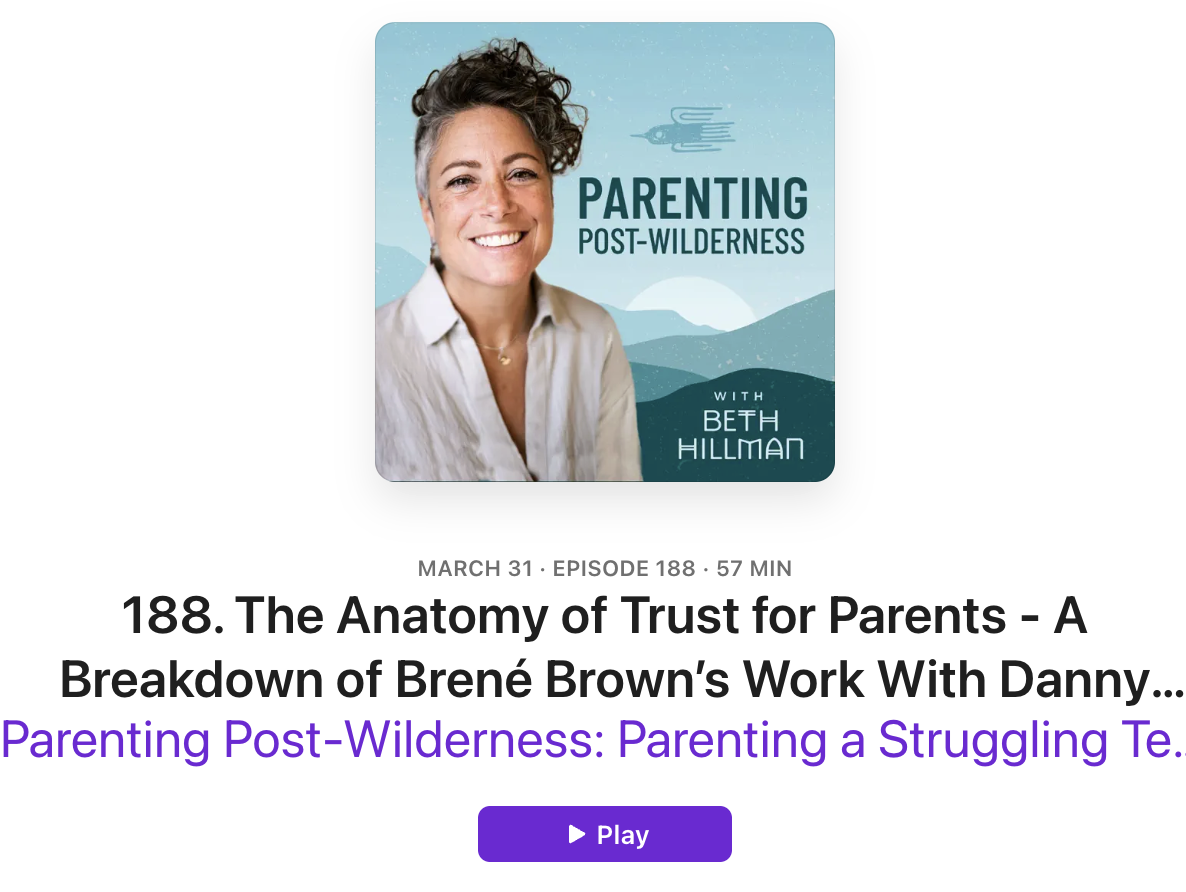
If this topic resonates with you, I joined a podcast conversation with Beth Hillman exploring the BRAVING model and the anatomy of trust for parents and leaders. Check it out.
