

Part 2 of a Two-Part Series on Rethinking Accountability and Restoring Trust.
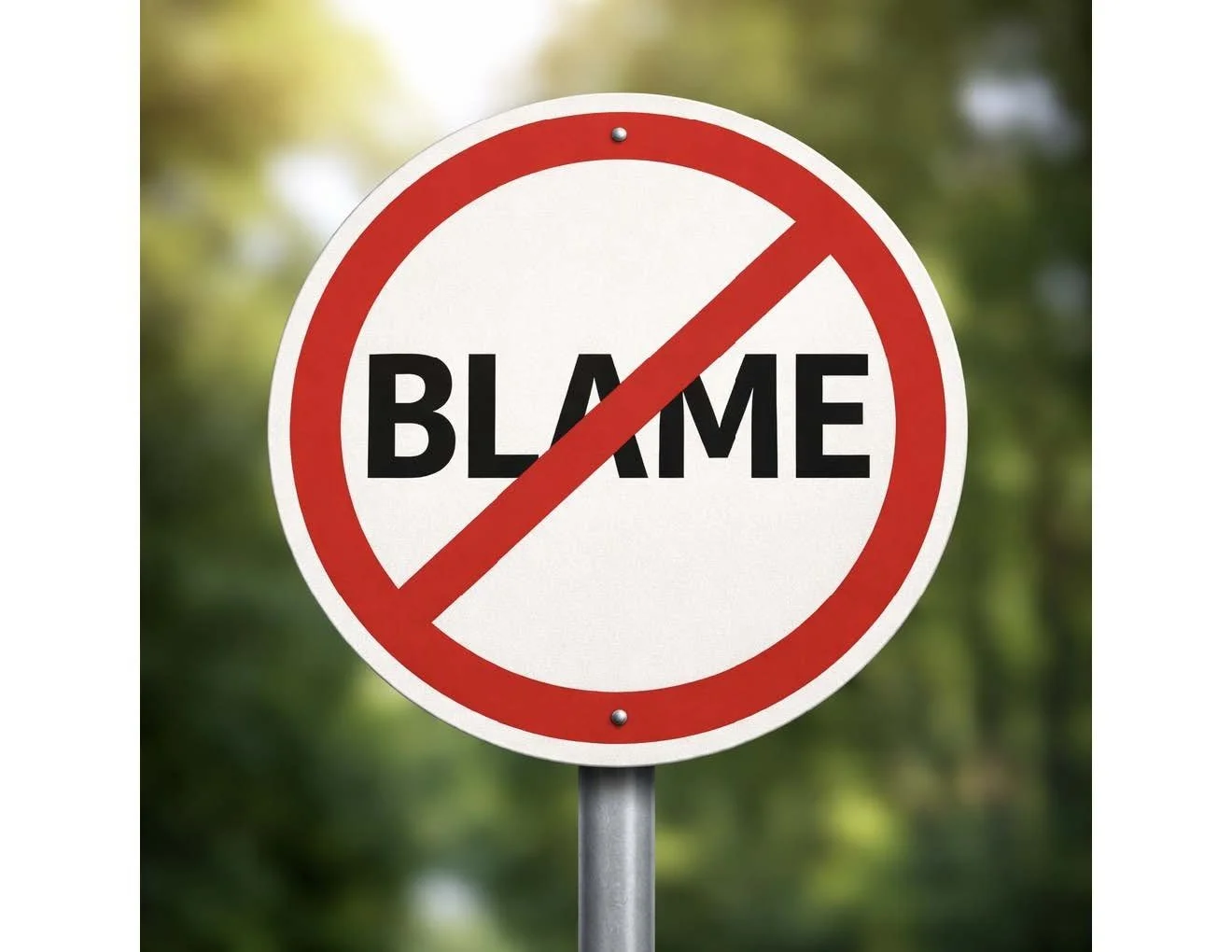
Resist the urge to blame—restoring trust after a major incident depends on it.
When the call came in that a student had fallen about 12 feet and was being flown to the hospital, I was in shock.
Once that wore off, I was immensely worried.
“Oh no… not again,” I thought to myself.
I felt the pressure to move quickly. A strong pull to take control.
We had been here before—not long ago.
And the last time, we responded decisively. We conducted a thorough investigation. We searched for root cause.
We held people accountable. We assigned blame to those closest to the action—those directly responsible for our students’ well-being. We fired and reassigned people.
It felt right. It felt like it would restore order. That it would rebuild trust—internally and externally.
But it didn’t. In fact, it had the opposite effect.
Distrust spread throughout the organization.
A New Premise of How People Show up
In the aftermath of the frostbite incident, something shifted—and not in a good way.
People grew cynical. Distrust became common. Teams became siloed. Competition replaced collaboration.
It forced me to question that approach. And, it started with questioning the premise about human behavior. How do people really show up when they come to work?
The prior approach assumes people are careless or apathetic, they will take shortcuts, or don't know what is best. So, they must be told what is right and feel the pressure of consequence to make up for it.
But, what if the opposite is true?
People are doing their best. People show up to make a difference. People are equipped with what it takes to do the job well.
From either perspective, inevitably, there will be poor outcomes…
The old assumption sees people as a problem to be solved, to be managed, requiring top down leadership to make sure they do what is right.
The alternative assumption sees people as capable but still fallible. It sees them as succeeding more often than not. It assumes that people have it in them to make the best choices, to overcome great uncertainty, to preserve and creatively problem solve.
However, if you believe people are the problem, your response will focus on fixing—or removing—them.
If you believe people are doing their best with what they have and are creating successful outcomes more often than not, your response starts to look very different.
Accepting That Mistakes Happen
In this case, I had chosen a new, different view - people are showing up to do their best. They are often succeeding in unique ways. They make mistakes, but it is the rare exception and not the norm. They are motivated to learn, grow and deliver.
Adopting this view was contagious.. like a breath of fresh air.
Those around me in our team began to see this too… and to feel the hope and the inspiration and the lightness that accompanied it.
Choosing to believe that people are showing up to do their best means that we also had to accept that even the best people will make mistakes. Even the best, most experienced, well-trained, deeply committed staff can will get it wrong sometimes. We all get it wrong sometimes.
Not because we don’t care. Not because we’re negligent.
But because the environments we operate in are complex, dynamic, and full of competing demands.
That’s not an excuse. It’s reality.
From Blame to Curiosity
In the past, we asked: “Who is to blame?” This time, we asked: “What is to blame?”
And more importantly: “Why did this make sense at the time?”
Those questions changed everything.
They moved us from judgment to curiosity. From defensiveness to openness. From fear to learning.
Because the truth is: You can learn or you can blame.
However, you can’t do both.
What We Learned
As we worked to understand "what was to blame", a different picture emerged.
Many things had been done well. Many things more than not actually.
For instance, Staff were attentive. They were engaged. They were following expectations in key areas to a “t”.
But we also saw something else. They were entirely unaware of something else happening altogether. It didn't even register for them. It was a true blind spot.
Why? Their attention had been shaped by what we had emphasized and rewarded. What we saw time and again. What families hired us to work with kids on: preventing them from engaging in their maladaptive and at times, even dangerous tendencies.
Specifically, we were highly attuned to these risks—like managing suicidal behavior, self-injury, preventing impulsive elopements, talking behind people's backs, or from subtle harassment.
But we had gaps elsewhere. Areas that didn’t get the same attention in our training or programming or risk management: Navigating higher risk terrain. Unusual environmental hazards.
These other risks that hadn’t received the same level of focus.
No one had ignored the risk. But the system and culture had guided attention in very specific ways. We had safety watch protocols, run watch protocols, self-harm protocols, "ears and eyes" supervision protocols.
And, we routinely celebrated our success in keeping students safe in these ways. We talked about it a lot. We trained hard on it for our staff from the outset. Our therapists would ask about it and we had reporting mechanisms. We had built in-depth systems and processes and in turn, our culture was hyper-vigilant when it came to these risks.
But all that attention, focus, system development and training didn’t prevent this student from getting hurt. None of it was helpful. None of it.
People Felt Supported
Because we didn’t seek to blame but instead sought to learn and grow and improve from this incident, it also changed how we engaged with the staff involved.
Instead of leading with correction, we led with understanding and even compassion.
We sat down with them and listened. Really listened.
We asked different questions this time:
What happened?
What made sense to them at the time?
What were you seeing and thinking in the moment?
What do you need from us to prevent this from happening in the future?
What support do you need right now?
The last question was the most profound: We could see the weight they were carrying—the fear, the regret, the emotional impact of what had happened. They knew this was serious. They showed up day after day committed to keeping our students safe and yet a child was injured and unable to continue the program.
This wasn’t about lowering expectations. It was about seeing clearly.
And, it was about recognizing that they showed up to give it their best. The outcome was the exact opposite of what they intended. They felt guilty, regretful and confused. They were worried it might happen again.
They needed our leadership. Leadership that would nurture and support them. Leadership that would give them the tools to do their job successfully. They needed to restore trust in themselves. And, they needed to restore trust in us as their leaders.
Rethinking Accountability
We were all, in some way, responsible for this incident.
We were also responsible for ensuring that it was not likely to happen again. We had to hold each other accountable, accountable to another way to proceed, to learn from our mistakes, to right our wrongs, to heal the harm done and to make the necessary changes. It was forward looking. It was our duty, our responsibility to the student who was injured and staff who suffered emotionally with guilt and pain for that happening on their watch.
That is restorative accountability. We had a responsibility to learn. A responsibility to improve. And, a responsibility to strengthen the system so the same thing is less likely to happen again. Accountability to ourselves to do all we can to learn and grow from this and change what didn’t work, and refine what is working.
This was the opposite of the retributive accountability, the old-school type we had taken after the frostbite incident. The type that drove a wedge between us. The type that stifled learning. The type that built walls and defenses.
Meaningful Change
And, our learning led to quick and significant changes.
Some were straightforward:
Adding regular terrain management training
Adding a procedure for preventing fall risks
Others were broader:
Adjusting how we prepared and reinforced the importance of managing objective, environmental risks
Improving communication systems
Clarifying emergency response processes
But the most important change wasn’t procedural. It was cultural.
People began to speak up more. Concerns were raised earlier. Teams collaborated instead of protecting themselves.
And, in turn, our trust in one another and in ourselves started to return quickly this time.
A Different Kind of Strength
In the past, we thought strength meant acting quickly and decisively. And, holding people accountability through sanctions.
This go round, we learned that another kind of strength is just as important:
The willingness to pause. To listen. To understand before acting.
To resist the pull of blame—and choose learning instead.
Effective Accountability Restores Trust
No one wants incidents like this to happen.
But they do.
Things will go wrong. It’s the nature of the work.
And every day, people still show up committed to doing the right thing.
When something does go wrong, leadership is tested—not just by what happened… but by how we respond.
In our case, this fall incident—something we never wanted—gave us an unexpected gift.
A chance to do it differently. A chance to repair what had been damaged. A chance to rebuild something stronger.
Because in the end, accountability isn’t really about control. Accountability is about trust.
And when we shifted our focus from blame to learning, from punishment to understanding, we didn’t just reduce future risk.
We restored something far more important:
Trust in each other.
Trust in our systems.
And trust in our ability to get better.
That’s the kind of accountability that actually works.
